Featured

Briefing note: impact on the ecosystems of Sydney Harbour

There are several immediately obvious problems with the EIS when it comes to marine contamination:

  1. Non-disclosure of concentrations and location of contaminants in sediment, as outlined above.
  2. Failure to flag contamination with the EPA, as required by Contaminated Land Management Act.
  3. Nowhere in the entire EIS is the potential impact on important public recreational assets such as the Dawn Fraser Pool, or Greenwich Baths, both heavily used by young families, addressed. What will be the impact of contaminated marine sediment disturbance on these vital facilities?
  4. The EIS cites outdated guidelines, not current guidelines in relation to marine sediments.

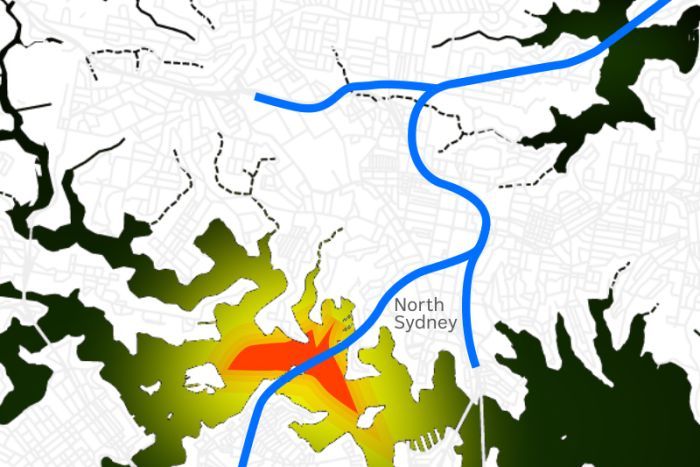
The Environment Impact Statement (EIS) relating to the Western Harbour Tunnel/Beaches Link project is a document constructed so as to obfuscate the very real contamination risks posed by long-present toxins on the harbour bed, particularly in the once heavily industrialised areas of Birchgrove and Berry’s Bay. References to the presence of toxins appear to be deliberately veiled, fleeting and scattered in a relatively random way through a document more than 250 pages long.

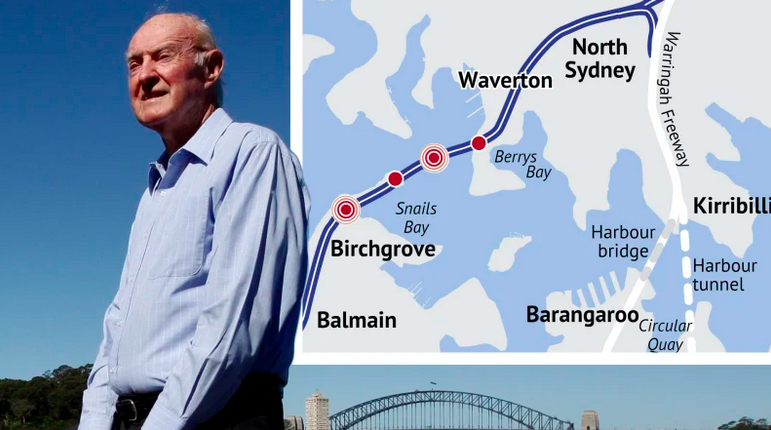
The project, as currently proposed, would see prefabricated sections of the proposed harbour crossing laid in a shallow trench across the harbour from Birchgrove to Waverton. Disturbance of marine contaminants would be an inevitable outcome of creating both the trench, and constructing  two massive so-called “coffer dams” from which all water has to be removed, exposing the sea-bed to enable connection of the tunnel to the prefab crossing sections. 

The EIS goes out of its way to avoid acknowledging the presence of contaminants in harbour sediment. For instance, the technical working paper says:

Contamination has been reported in sediments present within Sydney Harbour. Contamination is likely to be associated with inputs from the surrounding urbanised catchments, historical industrial operations and the general maritime use within the harbour. The sediments pose a high contamination risk to construction given that contamination is known to be present within sediments which are likely to be excavated and exposed during construction of the Sydney Harbour south cofferdam (WHT5) and Sydney Harbour north cofferdam (WHT6)

EIS Technical Working Paper, p. 2

But the presence of toxic sediments in the areas proposed for excavation/disturbance has long been well documented, for example in this paper by leading expert, Gavin Birch and others.   

Buried at the back of the EIS is a technical working paper, Appendix  M, entitled Contamination. Its table 4.2 states that ‘potential” contaminants include  “Heavy metals, hydrocarbons (mainly Polycyclic aromatic hydrocarbons (PAH)), pesticides, PCB, dioxin, organotins, per- and poly- fluoroalkyl substances (PFAS)” . More information about what was found in the sediments is at p.56 and 57,of Appendix M among other places.

Geochemist Bill Ryall is a remediation specialist who has worked for the NSW government and was a site auditor accredited by the NSW Environmental Protection Authority. He has reviewed Appendix M and the EIS report itself and found that the EIS should have, but does not reveal the distribution or concentration of the contaminants in the marine sediment which will be disturbed by the proposed method of construction. Therefore it is impossible for the SEARS (Secretary’s Environmental Assessment Requirements) to be met as the EIS stands. It is a serious problem that, in Bill Ryall’s words, “[the EIS] does not provide any indication of the seriousness of the contamination in sediments in the Immersion Tube Tunnel Corridor or in White Bay.”

it is impossible for the SEARS (Secretary’s Environmental Assessment Requirements) to be met as the EIS stands.

The cocktail of chemicals present include dioxins (human carcinogens and often referred to as “ gender benders”), heavy metals , especially mercury, which is toxic both to human health and the marine ecosystem, and TBT ( tributyl tin) among others, TBT also being potently toxic to the marine ecosystem.

Critically, Jamie Parker MP sought information from the Western Harbour Tunnel “team” inside the Department of Transport. On expert advice, he included the question, “What are the concentrations of the various chemical substances in the sediment that will be dredged?”

But the request was denied.

Instead he was told, in a response from Jacqueline Smith ( principal manager communications – Western Harbour Tunnel Beaches Link Infrastructure and Place. Transport for NSW) that:

“This information forms part of a commercial in confidence procurement process and for probity reasons cannot be released at this time.”

Jacqueline Smith ( principal manager communications – Western Harbour Tunnel Beaches Link Infrastructure and Place. Transport for NSW)

This email can be provided.

Bill Ryall has managed more than a dozen remediation major remediation projects, including at Homebush Bay. He says never before has he seen “commercial in confidence” used as an excuse to deny the provision of such information. There is the additional point that tenderers will have to be given this information in order to tender accurately. So how can it possibly be “commercial in confidence”?

This is the non-disclosure issue.

The EIS cites outdated guidelines, not current guidelines in relation to marine sediments. Appendix M says that “Sediment sampling was carried out within the proposed Sydney Harbour crossing and construction support sites at White Bay (WHT3) and Berrys Bay (WHT7) as part of the DGPA (December 2017a) investigation. Sediment samples were collected from a range of depths and analysed for contaminant compounds including heavy metals, TRH, BTEX, PAH, OCP, PCBs, per- and poly-fluoroalkyl substances (PFAS), dioxins, OPP, organotins, dioxins and furans, ASS, cyanide, nutrients, pyrethroids, chorobenzenes, carbamates, phenols, herbicides, volatile chlorinated and halogenated hydrocarbons and radionuclides. The results of the laboratory analysis were compared against the following guideline criteria: ANZECC (2000) High and Low Interim Sediment Quality Guidelines (ISQG)” (p. 56). But those 2000 guidelines are completely out of date. Current guidelines, which are from 2013, should have been cited.

This document was prepared by the WHTAG community group.

Further Resources

This brief document highlights the most obvious, but by no means all, the fundamental flaws in the marine sediment sections of the EIS. For further information see:

Voice your concern

Now it’s time to make a submission to the Environmental Impact Statement 

Deadline extended to 30 March

But registration is complex and requires a confirmation code that takes some days to receive, so begin the process now!
To help prepare your submission read:

How to make a submission

Jamie Parker MP’s guide to making a submission & letter template
How to use the planning portal & make a submission:

The Department of Planning Industry and Environment (DPIE) requires you to create a log in to their planning portal to make a submission. Please note this is NOT a submission to the RMS (now known as the Department of Transport (DofT)) as they are the proponent. We need to ensure our submissions now go to the department responsible for assessing and approving the project and not the one designing it. The portal is the way the DPIE gathers community responses to the EIS – they are the body responsible for doing so. If you have entered feedback at a mobile station or RMS/ DofT information session you have NOT made a formal submission against the project.

Once you have created a log in you will be able to select the project (SSI_8863) and complete an online form which outlines the basis of your objection (s). You will be asked if you a) support the project, b) are making a comment or c) are objecting to the project. It is important to note that “objecting to the project” means objecting to part or the whole project as it is outlined in the EIS rather than the concept of the project or what it could be. An objection has the most influence over whether Conditions of Approval will be granted which ensures that the community is best protected. As a community we need as many people as possible to submit their objections to ensure that our communities valid concerns are heard.

You can make you objection as simple or as detailed as you like. It is important to include personal content to explain how you, your family or community will be personally impacted. It is also good to suggest what alternative you would like or what condition you would like to see if possible. If you are using any guidance documents try to personalise them a little as multiple “form letters” are counted as a single objection.  We suggest that you save your objection as a pdf, upload it and then on send to your local MP, Council, the Chief Scientist and Medical Officer. Locate contact details below.

You can view the full EIS on the Planning Portal website here or view the government’s simplified guide to the EIS here

Media coverage

‘I’m outraged’: Secrecy over plan to dig up Sydney Harbour’s toxic sludge

By Carrie Fellner (SMH) – 19 March 2020

Thousands of tonnes of toxic sludge containing cancer-causing chemicals is set to be dug up from the bed of Sydney Harbour …

Western Harbour tollway: What makes up the toxic sediment in Sydney Harbour

By Clare Blumer (ABC News) – 14 Mar 2018

There are dangerous toxic industrial by-products lying at the bottom of Sydney Harbour that could be disturbed if a plan to build another underwater tunnel is approved.

Alan Jones opposes the Western Harbour Tunnel

The Alan Jones Breakfast Show 2GB
Friday 20 March 2020

'I'm outraged': Secrecy over plan to dig up Sydney Harbour's toxic sludge

Image result for Bill Ryall Western Harbour Tunnell
Image Credit Credit:Dean Sewell: Sydney Morning Herald
By Carrie Fellner

Sydney Morning Herald, March 19, 2020

Thousands of tonnes of toxic sludge containing cancer-causing chemicals is set to be dug up from the bed of Sydney Harbour, under plans for the Western Harbour Tunnel that one of the state’s leading contamination experts fears do not protect the public, including fishermen and families who swim in harbour pools.

It comes amid revelations the exact concentrations of the chemicals in the sludge will remain secret after the NSW government ruled that a report containing the information was “commercial in confidence” and should not be released to the public …

Read the rest of the article in the Sydney Morning Herald

Bill Ryall's Report on the Environment Impact Statement (EIS)

These informal notes have been prepared in response to requests from members of the community to allow them to better understand technical aspects of the EIS relating to excavation, transport and treatment of contaminated sediments as part of the WHT project.

Download the Report here:

Dr Bill Ryall has approximately 30 years experience in assessment and remediation of contaminated soil, groundwater and sediments.

From 1998 to 2008 he was a site auditor accredited by NSW EPA under the Contaminated Land Management Act 1997 to review consultant’s investigation reports and remediation action plans (RAPs) and, after remediation was completed, to sign-off the suitability of the sites for intended uses. He has experience in approximately 20 locations of sediment investigation and remediation works in Sydney Harbour and other locations.

.

Decades of research show contaminants

The EIS lists contaminants as “Potential” but their presence is well documented.

Risks to human and environmental health due to disturbance of contaminated toxic sediments

The EIS fails the Secretary’s Environmental Assessment Requirements (SEARS) due to inadequate assessment of the risks to human and environmental health due to disturbance of contaminated toxic sediments. The EIS scope ignored detailed scientific knowledge key to informing the public, including the toxicity of sediments in WHT proposed area. The contaminants were listed in Appendix M on pages 56 and 57 in Tables 4.2 and 5.2 as “Potential” contaminants. This is misleading because the cocktail of persistent contaminants and their concentrations are well documented.

This weight of evidence from decades of research shows that Sydney Harbour sediments are among the most toxic globally. Quantification of the contaminant mixture includes a suite of metals (Birch et al. 2017) and non-metallic contaminants including organochlorine pesticides (OCs, Birch and Taylor 2000), polycyclic aromatic hydrocarbons (PAHs, McCready et al. 2000), dioxins and furans (Birch et al. 2007), polybrominated ethers (PBDEs) and the highly toxic biocide antifoulant chemical tributyltin (MEMA, 2014). It is the mixture of these chemicals and the sediment pore water interface that creates toxicity to marine life (McCready et al. 2006: Birch et al. 2008). These chemicals also have severe impacts on human health as carcinogens. The Proponents did not include this wealth of data in the scope of Appendix M and there is no mention of sediment pore water as a source of toxicity. One can only surmise that they chose not to use this information

The release of a toxic cocktail of contaminants through dredging is of great concern especially with respect to the chemical mixtures and the additional risk of disturbance of acid sulphate soils. Acid sulphate soil/sediment (ASS) leachate releases sulphuric acid into the environment, reducing seawater pH and thereby increasing the bioavailability of metals and other contaminants, making matters even worse. The combination of ASS and chemical mixtures in sediment and pore water presents a very high risk to marine life. This was not considered in the EIS.

Major pollution and environment impacts such as fish kills, and human exposure seem inevitable. Shallow silt curtains are considered, but these will not prevent movement of contaminated fine particles. Full-length curtains anchored to the seafloor are the only viable method of control. No curtains can prevent dispersal of sediment pore water.

In accordance with the SEARS, no decision to excavate sediments can be made until the data on the concentration of the contaminants are provided, the toxicity determined, the volumes of contaminated sediment to be excavated documented and the requirement that this be addressed as a remediation project assessed.

Dr. Maria Byrne, 24 Grove St Birchgrove

Download this document:

References

  • Birch et al., (2007) The source and distribution of polychlorinated dibenzo-p-dioxin and polychlorinated dibenzofurans in sediments of Port Jackson, Australia Mar Poll Bull 54: 295-308.
  • Birch et al., (2008) Contaminant chemistry and toxicity of sediments in Sydney Harbour, Australia: spatial extent and chemistry-toxicity relationships. Mar Ecol Prog Ser 363: 71-87;
  • Birch & Taylor (2000) Distribution and possible sources of organochlorin residues in sediments of a large urban estuary, Port Jackson, Sydney. Aust J Earth Sci 47: 749-756
  • Birch & Taylor (2002) Application of sediment quality guidelines in the assessment and management of contaminated surficial sediments in Port Jackson (Sydney Harbour), Australia. Env Mgt 29:660-670. Birch (2017) Assessment of human-induced change and biological risk posed by contaminants in estuarine/harbour sediments: Sydney Harbour/estuary (Australia). Mar Poll Bull 116:234-248.
  • Birch & Lee (2018) Baseline physico-chemical characteristics of Sydney estuary water under quiescent conditions. Mar Poll Bull 137: 370-381
  • Drage et al. (2015) Historical trends of PBDEs and HBCDs in sediment cores from Sydney estuary, Australia. Sci Tot Env 512-513: 177-184
  • McCready et al, (2000) The distribution of polycyclic aromatic hydrocarbons in surficial sediments of Sydney Harbour, Australia. Mar Poll Bull 40: 999-1006;
  • McCready et al, (2006) Relationship between toxicity and concentrations of chemical contaminants in sediments from Sydney Harbour, Australia, and vicinity. Env Mon Ass 120: 187-220.
  • MEMA Sydney Harbour Background Report (2014) Sydney Institute of Marine Science prepared for NSW Department of Primary Industries